
Brand Storytelling Boot Camp: How Wedding Videographers Make Great Commercial Filmmakers
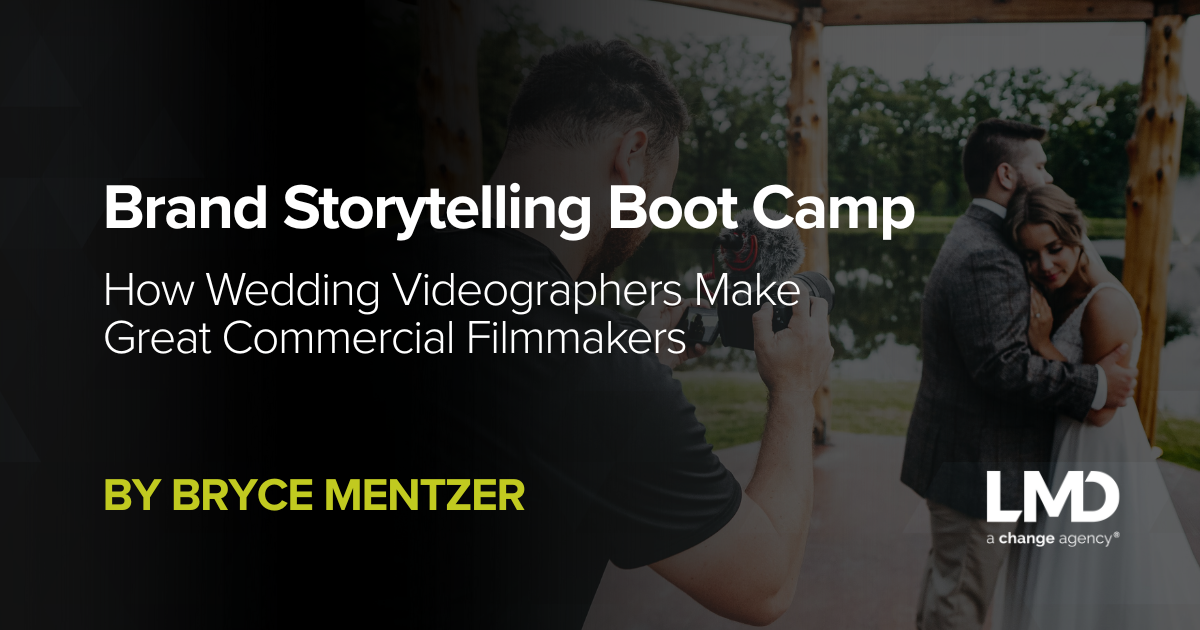
There’s a theory I haven’t been able to shake lately: Wedding videographers, those tireless weekend warriors hustling between venues, timelines, and lighting conditions that seem to change out of spite, are some of the most naturally gifted commercial filmmakers in disguise.
It sounds dramatic until you’ve watched one of them work.
Most people think of weddings as chaotic, sentimental, and maybe a little overwrought, but for the filmmaker behind the camera, they’re something else entirely: a place where nothing goes as planned and yet everything still has to look beautiful. They are a kind of cinematic boot camp that trains you to see, react, adapt, and, maybe most importantly, not crumble under pressure–all skills that translate shockingly well to commercial sets.
Why do so many wedding shooters eventually wander into the world of brand storytelling and fit in as if they’ve been there all along? Here are my theories.
They Solve Problems Before Anyone Notices There’s a Problem
On a commercial set, everyone pretends they’re prepared. Storyboards. Schedules. Backup plans. A sense of control, or something that resembles it.
A wedding day laughs at all that.
Being a wedding filmmaker means waking up acutely aware that the timeline you were emailed is, at best, a polite suggestion. Someone’s always running late. A thunderstorm materializes out of nowhere. The officiant’s mic dies. The DJ botches the couple’s names. The mother of the bride requests “just one more shot,” which is never, ever just one more shot.
Wedding shooters don’t melt down; they triage. They make fast decisions that actually matter. They instinctively adjust angles, lighting, blocking, audio, and mood, and do it all with a smile because the emotional temperature of the entire day often rests on the people holding the cameras.
That kind of emotional multitasking is rare, and on a commercial set where time is money and clients become just as unpredictable as a tipsy uncle giving a speech, it becomes a superpower.
They See Frames Before They Exist
Here’s something most people don’t know about wedding shooters: they’re constantly predicting the future.
Weddings are made up of moments that happen once and then disappear. A father shedding a tear. A shaky breath before the vows. A small window of golden-hour light that vanishes the moment you blink.
There’s no time to debate lenses or move a light three feet to the left. You learn to feel where the moment is heading. You pre-visualize scenes in real time and in spaces you’ve never shot before and probably will never see again.
Commercial filmmaking loves that kind of intuition. Plenty of directors freeze when a location doesn’t exactly match their aesthetic pitch deck. Former wedding filmmakers? They’ll find the light, shape the frame, and elevate the visual in seconds. They’ve trained their eyes on unpredictability, and they’ve been practicing speed-composition for years.
They Know How to Tell Emotional Stories Without a Script
Commercial clients love to talk about “authentic storytelling.” They want real. They want grounded. They want human.
Wedding filmmakers do this without thinking. They’ve spent hundreds of hours crafting films about real people and know how to capture unscripted tenderness, building a narrative arc from moments that weren’t blocked or rehearsed. They see the tiny emotional details—the glances, the hands brushing, the breath before “I do.”
In commercial work, where the best shots hinge on subtlety rather than spectacle, this is gold. Brands spend millions trying to manufacture emotions; wedding filmmakers capture emotions every weekend with nothing more than instinct and a camera.
They Don’t Stress
There’s a certain calm that develops after you’ve filmed enough weddings. It’s the calm of someone who’s seen it all—mics failing mid-ceremony, rings misplaced, timelines collapsing—yet still delivered a film that made people cry.
Wedding filmmakers show up to commercial sets with perspective. They don’t panic when the shot list changes, spiral when the weather shifts, or unravel when talent needs fifteen more minutes.
They know how to keep the room steady, the crew moving, and the vision intact even when variables change. That steady presence is one of the most underrated parts of directing, and wedding creatives naturally carry it.
They Understand People–Like, They REALLY Understand Them
Wedding filmmaking is deeply personal work. You spend long hours embedded in families, witnessing intimate moments most people never see. You quickly develop the social and emotional intelligence needed to comfort, guide, gently take control, and even disappear when necessary.
Commercial filmmaking, despite its polish and scale, is still about people. Clients. Agency creatives. CEOs. Talent who might not know what to do with their hands.
Wedding filmmakers read rooms effortlessly. They know how to reassure, how to coax natural performances from ordinary humans, how to navigate ego, nerves, and stress with a soft touch.
And honestly? That’s half the job. If you’ve shot weddings long enough, you know something most filmmakers don’t: Beauty isn’t fragile. It exists in chaos, in imperfection, in fleeting seconds you never saw coming.
Commercial filmmaking rewards that mindset.
The truth is simple: If you can shoot a wedding well, truly well, you’ve already developed the instincts, resilience, and emotional intelligence that make a great commercial filmmaker. Weddings aren’t a detour. They’re a proving ground, and the people who come from that world walk onto commercial sets with a sense of readiness no classroom or film school could ever teach.
That’s really the through line between everything said here and the way LMD approaches commercial filmmaking. We don’t rely on perfect conditions or rigid plans; we rely on preparedness disguised as flexibility. Everything we produce is built on that foundational belief that storytelling is less about manufacturing perfection and more about capturing authentic stories.
And that’s how the best stories are crafted.
At LMD, we build stories from instinct, empathy, and an unwavering commitment to capturing the truth in front of us. Because when you do that, the finished film doesn’t just look polished—it resonates.
