

White Paper.
The Art of Science Communication
Publicly funded science must be understood, trusted, and applied by the people it serves. By taking audience-centered approaches that translate complex research into meaningful, real-world value, organization's can make their scientific communications effective and scalable.
Contents
Publicly funded science communications functions often look very similar to modern strategic marketing across other industries. They incorporate planning and strategy, media relations, digital engagement, brand management, content development, and outreach.
However, they also have the added complexities of public accountability and the need to engage a wide range of stakeholders, including Congress, the news media, state and local governments, other federal agencies, research and academic communities, and the general public.
Fortunately, the tools for addressing these added complexities are already known, and some of the country’s leading public-sector science organizations are applying them successfully. That gives us good reason to believe that effective science communication is not only possible, but replicable.
NASA invests in large-scale public engagement efforts that are intentionally collaborative, making science accessible and approachable. The NASA Science Activation (SciAct) program unites educators, experts, and community-based learning providers to link individuals from diverse backgrounds and ages with genuine science experiences, engaging NASA content, and NASA science experts (NASA Science Activation, n.d.).
The National Oceanic and Atmospheric Administration’s (NOAA) service delivery model centers the public as the end user of its scientific work. Success for the agency relies on trust and respect, cultivated through sustained engagement and collaboration, to convert science into practical, actionable information. For NOAA, continuous user engagement is key. NOAA coordinates information production and consistently interacts with stakeholders to understand evolving needs (National Oceanic and Atmospheric Administration, 2022). NOAA also recognizes that the value of large investments in science is realized only when results, risks, and outcomes are communicated effectively (National Oceanic and Atmospheric Administration, 2016).
The National Institutes of Health (NIH) frames communication as a core capability for connecting the public with NIH-funded research. NIH established a set of science communication precepts that explicitly include defining communication objectives; understanding and defining audiences through research; developing a communications strategy; selecting audience-specific communication channels, media outlets, and partnerships; and evaluating outcomes (National Institutes of Health, n.d.a).


Taken together, these examples demonstrate that effective science communication is collaborative, audience-centered, and research-based.
Effective science communication builds broad networks of experts and community partners to connect with the public. It prioritizes sustained engagement to translate complex science into practical, actionable information. And it relies on a structured framework that includes defining clear objectives, understanding and segmenting audiences, selecting appropriate channels, and rigorously evaluating communications performance.
The key to communicating about publicly funded science is understanding that stakeholders must feel part of the science. We cannot simply share results and expect stakeholder support. As communicators, we need to involve our audience in the science, showing not only what was discovered, but why it matters and how it connects to their lives, decisions, and priorities.
Looking more deeply at the communications efforts led by top-tier publicly funded science organizations like NASA, NOAA, and NIH, we’ve developed a list of best practices and practical ways these organizations are making complex science approachable.
Enduring Science Communication Best Practices
Engage in Dialogue
Scientific organizations must go beyond sharing updates and make scientific information available to the public. They must translate discovery into public value: better health, safer communities, a stronger economy, and smarter policy. The National Academies’ Communicating Science Effectively report notes that communicating science effectively is complex and that the most effective approaches for specific audiences and circumstances are often not obvious (National Academies, n.d.a). But no matter the audience, the report emphasizes approaching science communication as a dialogue, a two-way conversation.
Two-way engagement is a long-standing best practice. The National Academies emphasize that dialogue-based public engagement is often better than one-way transmission for achieving science communication goals (National Academies, n.d.b). Similar research argues for moving from the “deficit model,” meaning one-way transfer from expert to lay audience, toward dialogue models characterized by mutual learning and the acknowledgment of different perspectives and values (EMBO Reports, 2020). This shift matters especially for federally funded science because stakeholders, including Congress, community leaders, industry, and the public, often weigh science information alongside values, costs, benefits, and risk tolerances (National Academies, n.d.c).
1
Put the Audience First
An audience-first strategy and research-based communication development are foundational. NIH’s “Clear Communication” guidance explicitly calls for conducting research on intended audiences, developing a strategy to achieve objectives, selecting channels and tactics suited to those audiences, and defining evaluation criteria (National Institutes of Health, n.d.a). NOAA’s risk communication synthesis similarly highlights planning and understanding audiences, including the principle “Speak to Their Interests, Not Yours,” explicitly pointing to stakeholder values and concerns as a pathway to better outcomes (National Oceanic and Atmospheric Administration, 2016).
2
Use Plain Language
Plain language is not optional in government science communication. It is both a best practice and required for compliance. The Plain Writing Act of 2010 is designed to improve the effectiveness and accountability of federal agencies by promoting clear communication that the public can understand and use. Federal plain-language resources emphasize first-read and first-hear comprehension (Office of Personnel Management, n.d.). NIH reinforces this same principle in its guidance: plain language helps reach all Americans with health information they can use and communicates in a way that helps people easily understand and use research results (National Institutes of Health, n.d.b).
3
Tell a Story
Narrative and visual communication are enduring tools for comprehension and relevance. NOAA’s best-practice list explicitly recommends using stories and visuals to make risk personal and help audiences understand impacts and hazards (National Oceanic and Atmospheric Administration, 2016). Research in environmental science communication similarly argues for integrating storytelling to increase stakeholder engagement and support evidence-based decision-making (Environmental Science Communication, 2018). These approaches are similarly useful for NSF’s “taxpayer value” storytelling mandate because the public tends to connect more readily to “why it matters” and “what changed” than to technical novelty alone (National Science Foundation, 2023).
4
Evaluate Communications Performance
Testing and evaluation separate effective science communication from guesswork. NIH’s communications precepts explicitly include evaluation, defining success and measuring it, and NOAA includes “test messages or products; evaluate performance,” cautioning that coworkers are not the audience and advising testing on target audience members (National Institutes of Health, n.d.a; National Oceanic and Atmospheric Administration, 2016). Tools like CDC’s Clear Communication Index operationalize these standards into measurable criteria, providing a research-based instrument for developing and assessing public communication materials, with scored items drawn from the scientific literature (Centers for Disease Control and Prevention, n.d.).
5

Admit What You Don’t Know
Finally, strong science communication maintains credibility by framing findings accurately, in context, and with appropriate uncertainty. NIH’s checklist recommends providing perspective and context for a study and grounding the research and its value in solutions to real-world problems (National Institutes of Health, n.d.c). Contemporary research also cautions that how uncertainty is communicated can influence trust, depending on the quality of the evidence and the perceived level of expert disagreement. This means communicators must be deliberate rather than simply “more transparent” if they want to increase understanding without unintentionally eroding confidence (Nature, 2024). It is often just as important to state what scientific results do not mean or what we still need to learn in order to make results actionable.
6

Why Effective Science Communication Requires Specialized Creative Expertise
The mandate of publicly funded science is not just to do science. It is to make the benefits of that science meaningful to the public. This requires skills that are adjacent to science but not the same as doing science.
Translation is a discipline
Scientists are trained for precision. Broad audiences need clarity and relevance. A creative partner like LMD specializes in turning complex material into engaging, relatable stories and experiences without compromising the science. This aligns with both federal plain-language expectations and digital-first public experience requirements.
1
Design and multimedia are no longer “nice extras”
“One press release plus one webpage” is no longer a distribution strategy; it’s a source file that must be repackaged into multiple formats: digital, web, multimedia, and outreach. The highest-performing science communication today is visual, modular, and platform-native. A creative agency brings:
Information design that actually explains complex ideas.
Motion and animation that make processes, systems, and data easier to understand.
Campaign packaging that supports grantees, partners, and educators.
Consistent brand storytelling across programs and audiences.
2
Audience strategy and stakeholder mapping are specialized skills
Federally funded science requires communicating with Congress, media, governments, state and local agencies, research and education communities, and the public. Each audience brings different questions about the value and benefit of the scientific initiative. Creative agencies like LMD can build a messaging architecture that maintains scientific consistency while tailoring value frames to each group.
3
Modern distribution is a production system
In a fragmented media world, one-and-done assets underperform. Creative agencies build content systems that include:
One core narrative that can be translated into many formats.
One research story that can be told through an explainer page, short video, social cutdowns, briefing deck, and infographics.
Evergreen content hubs that improve discoverability over time.
4
Credibility-friendly storytelling requires restraint
NIH’s checklist and the National Academies’ research agenda reinforce that credibility comes from context, careful language, and the acknowledgment of limitations, not from overpromising. A strong agency partner helps you be both compelling and careful, especially when the stakes include public trust and policy decisions.
When federally funded science is communicated well, it informs, inspires, and delivers broader value by:
Building durable support for investment.
Improving decision-making.
Strengthening public trust.
Accelerating real-world impact.
That is why science and research organizations benefit from creative agency expertise. Science is the heart; communication is the voice that helps the public understand its value, relevance, and impact.
5
How This Can Look in Practice
Translating complexity into public-facing clarity
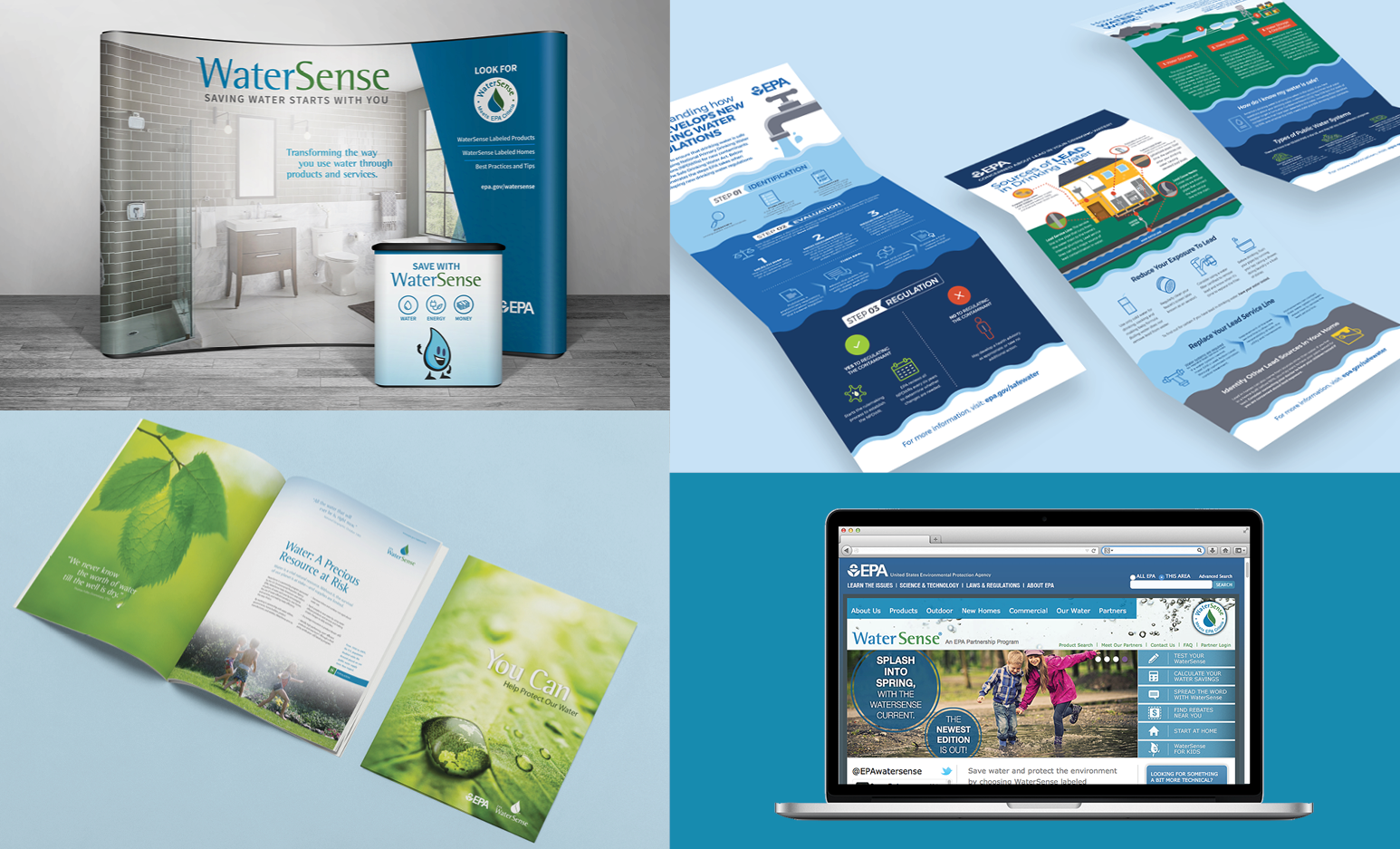
For the EPA’s Office of Water, LMD transformed technical materials for its WaterSense program into accessible communications assets, including a website redesign, content strategy, infographics, and print collateral. This helped consumers and private industry stakeholders understand the importance of water efficiency and the benefits of using WaterSense-labeled products while preserving scientific and technical accuracy.
Building a multi-format content system around one technical story
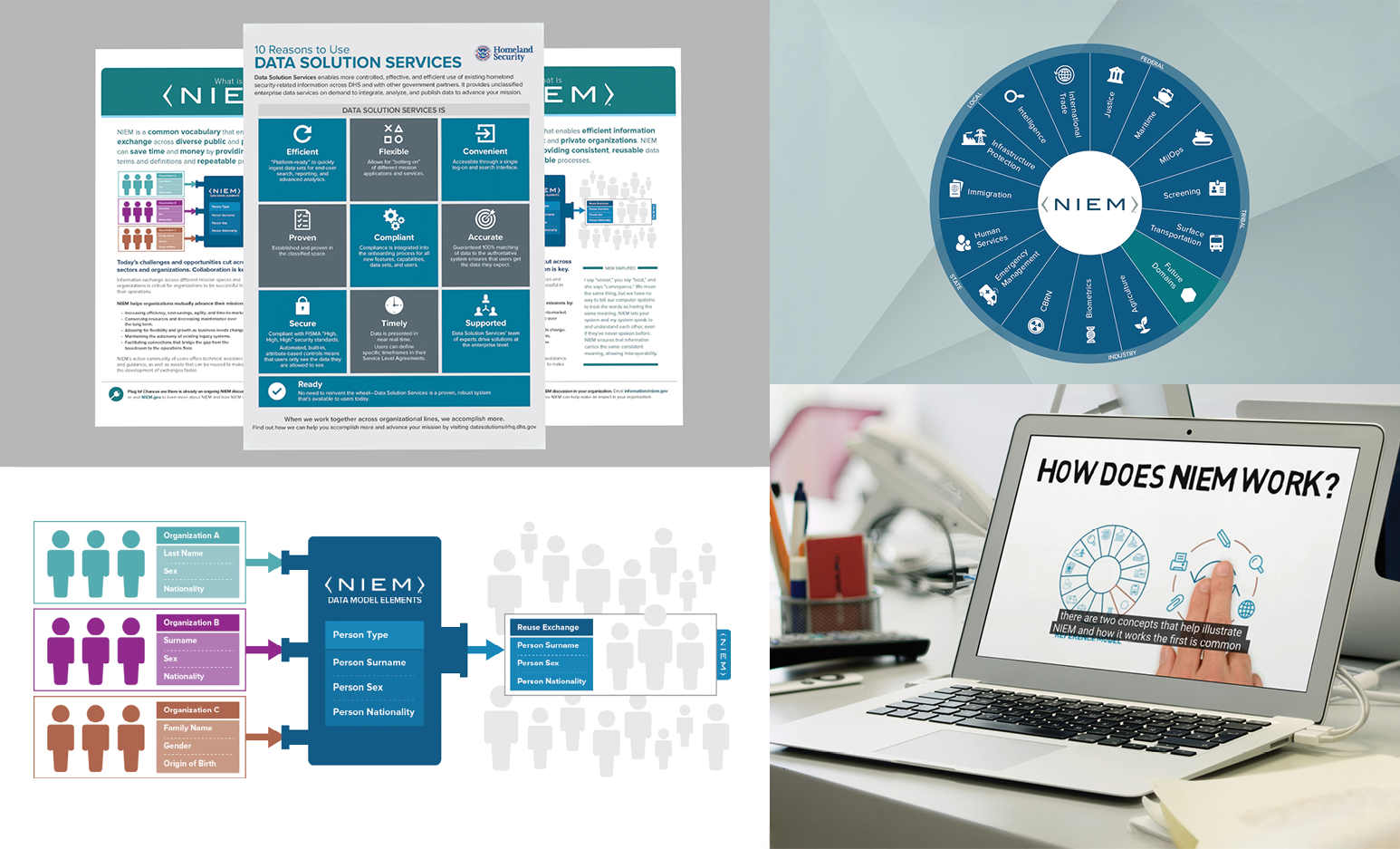
For the National Information Exchange Model (NIEM), a joint initiative of the Departments of Justice, Homeland Security, War, and HHS, LMD developed a messaging platform and core narrative, and extended them across multiple formats, including website content, explainer videos, infographics, fact sheets, and case studies. This made it easier to communicate consistently with multiple stakeholders–including data scientists, program analysts, policymakers, academia, and state, local, tribal, and federal program leads while increasing the reach and usability of the content.

A Practical Mini-Playbook for Communicating About Federally Funded Science
OMB’s digital-first guidance for federal public-facing experiences emphasizes accessibility, plain language, searchability, mobile-first design, and user-centered delivery.
Writing Act of 2010’s requirement for clear public communication, this means federally funded science content faces both mission pressure and policy pressure to be usable by real people. Here is a simple starting template.
FOR EVERY RESEARCH STORY, PRODUCE:
A one-sentence takeaway in plain language.
A clear explanation of what changed, whether a new finding, capability, or dataset.
A statement of why it matters, including who benefits and what decisions improve.
A simple explanation of how we know, with a link to the source.
A summary of confidence and limits, including uncertainty and what comes next.
One visual, such as a diagram, graphic, or animation.
DEVELOP AUDIENCE-SPECIFIC VARIANTS, SUCH AS:
Public or taxpayers.
Policymakers.
Technical stakeholders.
CREATE CONTENT IN MULTIPLE FORMATS, SUCH AS:
A searchable, accessible webpage.
A short video.
A social media carousel.
References

Publicly funded science earns its fullest value when it is not only discovered, but also Understood.
The science itself may begin in labs, datasets, and fieldwork, but its impact depends on how well it is communicated to the people who fund it, use it, and make decisions based on it. That is the art of science communication: helping rigorous work become visible, meaningful, and trusted.

Looking for Support?
LMD’s content team excels at turning complex research into meaningful, real-world value for your organization's audiences.